Definite and Indefinite Articles
Oct 13, 2025
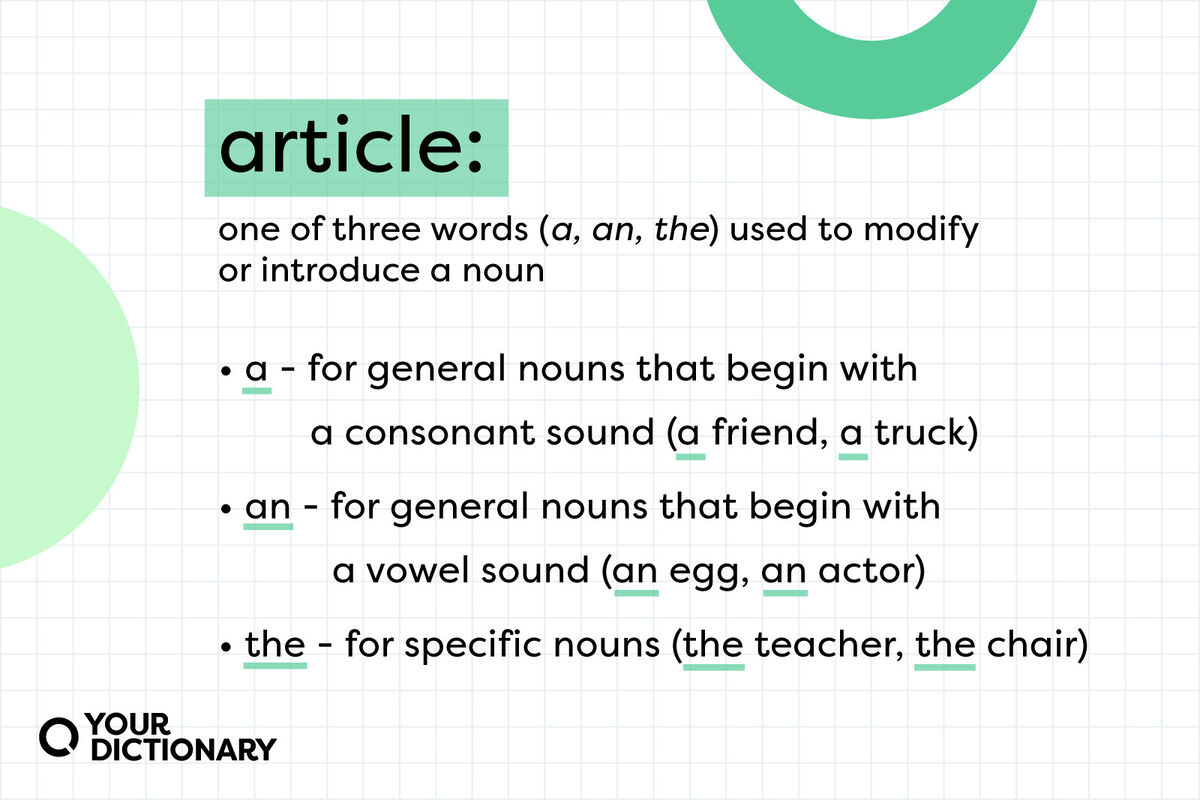
These grammatical terms refer to the following:
‘a’, ‘an’, and ‘the’.
The misuse or even omission of these terms is, in my experience, a regular occurrence with writers who have English as a second language. These terms have a specific use in terms of meaning, as well as a more general use to increase the fluency and flow of a sentence.
In terms of meaning, ‘a’ and ‘an’ (as in, ‘a table’ or ‘an optician’) would be the same as saying ‘any old table’ or ‘any old optician’. These terms do not refer to anything or anyone specifically (or definitively) but only to something that is a member of a group (of tables or opticians).
The term ‘the’, on the other hand, refers to a particular thing’. ‘The table’ is a specific table, not any old table. ‘The optician’ is a particular optician.
Secondly, either ‘a’ or ‘an’ is used depending on the sound of the opening of the word ‒ is it a consonant sound (‘table’) where you would use ‘a’, or a vowel sound (‘optician’) where you would use ‘an’. The reason for this is simple. Try saying ‘a optician’, or ‘an table’. They are quite difficult to say. That is the only reason for the difference, and knowing this clears up a common mistake made by English speakers. The use of ‘an’ before words beginning with ‘h’ is, of course, fine for words like ‘honour’ or ‘hour’ where to say ‘a honour’ or ‘a hour’ is difficult. However, this is only true if the ‘h’ is silent. There are native English speakers who continue to use ‘an’ with words like ‘history’, as in ‘an historical survey’. They seem to have forgotten the purpose of the use. Some people will follow a rule even if it means they walk off a cliff.
Finally, and just to confuse matters somewhat, there are time when you shouldn’t use ‘a’, an’, or ‘the’ at all. This is the time to call on your fluent English speaker, because the so-called rules governing the ‘zero-article option’ are vague and unwieldy, but to omit articles, or use them when it is not necessary, is a sue indication for the reader that the writer is not fluent. However, some examples of not using an article are:
Cars can be dangerous. (Not ‘The cars’ but cars in general).
We seldom see courage like that. (Not ‘a courage’ or ‘the courage).
I could see clouds in the sky. (Not specific clouds, but lots of them)..
Do you speak French? (Not ‘Do you speak the French?’)
He is good at tennis. (Not ‘the tennis’).